I remember sitting across from a small business owner named Sarah a few years ago. She was frustrated, exhausted, and on the verge of giving up on her digital marketing. “I’m spending thousands trying to rank for ‘accounting software,'” she told me, “but I’m invisible. When I do get a click, it’s someone looking for a free trial or a student doing research. Where are the actual clients?”
Sarah was falling into a trap that catches even the most seasoned marketers: the obsession with “head terms.” She wanted the highest search volume possible, thinking that more traffic naturally equals more money. But in the modern SEO landscape, that logic is fundamentally flawed. The secret that experts won’t tell you is that high-volume keywords are often the fastest way to burn your budget with zero ROI.
The real magic—the kind that builds sustainable, high-growth businesses—lies in the “long tail.” These aren’t just longer phrases; they are windows into the specific needs, pains, and ready-to-buy mindsets of your ideal customers. Today, I’m going to mentor you through the process of mastering long-tail keywords to transform your lead generation from a trickle into a flood of high-quality prospects.
Key Takeaways
- Specificity Beats Volume: Long-tail keywords have lower search volume but significantly higher conversion rates because they match specific search intent.
- Lower Cost, Higher ROI: These terms are less competitive, making them easier (and cheaper) to rank for in organic SERPs and paid campaigns.
- The “Buyer’s Journey” Alignment: Success comes from mapping specific long-tail queries to the awareness, consideration, and decision stages of your sales funnel.
- Semantic Context Matters: Google’s modern algorithms (like BERT and Hummingbird) reward content that answers comprehensive user needs, not just keyword matching.
2Understanding the Anatomy of a Long-Tail Keyword
Most people think a long-tail keyword is simply a search query with four or more words. While length is a factor, it’s not the defining characteristic. A true long-tail keyword is defined by its specificity and its position on the search demand curve. Think of it this way: “Shoes” is a head term. “Running shoes” is a middle-tail term. “Best carbon-plate marathon running shoes for flat feet” is a long-tail keyword.

Here is the hard truth about head terms: they are dominated by giants. If you are a boutique agency or a growing SaaS platform, you cannot outspend the Amazons or the Forbes of the world for broad terms. But you can out-think them. Long-tail keywords represent about 70% of all search traffic. Because they are so specific, the competitiveness is drastically lower, allowing you to establish authority in niche markets quickly.
When you target these specific phrases, you aren’t just looking for “traffic.” You are looking for a specific customer persona. By the time someone types a long-tail query into Google, they have moved past general curiosity. They are looking for a solution to a very specific problem. This is where your SEO strategy transitions from a guessing game to a precision strike.
3The Search Intent Secret: Why Context is King
I see this mistake constantly: a company ranks for a long-tail phrase, but their bounce rate is astronomical. Why? Because the content doesn’t match the search intent. Google’s Natural Language Processing (NLP) capabilities, fueled by updates like BERT and Hummingbird, are designed to understand the “why” behind a search query.
There are generally four types of intent you need to master:
- Informational Intent: The user wants to learn something (“how to generate leads”).
- Navigational Intent: The user wants to find a specific website (“HubSpot login”).
- Commercial Investigation: The user is comparing options (“best lead gen tools for B2B”).
- Transactional Intent: The user is ready to buy or sign up (“buy lead generation software subscription”).
| Keyword Type | Search Volume | Competition | Conversion Potential |
|---|---|---|---|
| Head Term (e.g., “Marketing”) | Massive | Extreme | Very Low |
| Middle-Tail (e.g., “Email Marketing”) | Moderate | High | Medium |
| Long-Tail (e.g., “Email marketing for small law firms”) | Low | Low | Very High |
The secret to high-quality lead generation is focusing heavily on commercial and transactional long-tail keywords. This is where the high-intent keywords live. These users have already finished their initial research; they are now narrowing down their final choice. If you show up at this exact moment with a perfect answer, the lead is yours.
“The goal isn’t to be seen by everyone; the goal is to be indispensable to the right someone.”
4Finding the Gold: Advanced Keyword Research Strategies
Now, here is where it gets interesting. How do you find these “magic” phrases? You don’t just guess. You need to use keyword research tools effectively, but you also need to look where your competitors aren’t looking.

- Mining “People Also Ask” (PAA): These are literal questions your customers are asking. Each one is a potential question-based keyword that can be the foundation of a cluster content strategy.
- LSI and Semantic Research: Use tools like Ahrefs or SEMrush to find latent semantic indexing terms. These are phrases related to your main topic that help Google understand the depth of your content.
- Niche Forums and Reddit: Go where your audience hangs out. What specific phrases do they use to describe their pain points? These “conversational queries” are pure gold for voice search optimization.
- Analyze the Gap: Look at your competitors’ organic traffic. Which specific long-tail phrases are driving their revenue growth? Don’t copy them—improve upon them.
5Mapping Keywords to the High-Quality Lead Funnel
A lead is not just a lead. A lead in the awareness stage needs to be nurtured differently than one in the decision stage. This is where your SEO strategy meets your content marketing and sales funnel.
To generate high-quality leads, you must map your long-tail keywords to the buyer’s journey:
The Awareness Stage (Top of Funnel)
User Problem: “Why is my website not getting any leads?”
Long-Tail Keyword: “Common reasons for low website conversion rates in B2B.”
Content Type: Educational blog post or a checklist. This builds authority and trust.
The Consideration Stage (Middle of Funnel)
User Problem: “I need a better tool, but which one?”
Long-Tail Keyword: “Comparison of lead generation software for small agencies.”
Content Type: Case studies, comparison tables, and “Best of” lists. This is where you demonstrate your competitive advantage.
The Decision Stage (Bottom of Funnel)
User Problem: “I’m ready to buy, but is this the right choice?”
Long-Tail Keyword: “[Your Product] pricing for enterprise teams with CRM integration.”
Content Type: Demo pages, free trial sign-ups, and detailed feature breakdowns. These are high-intent keywords that lead directly to revenue growth.
6Technical Execution: On-Page SEO for the Long Tail
You’ve found the keywords. You’ve mapped them to the funnel. Now, you have to ensure the on-page SEO is flawless. Most people get this wrong by over-optimizing, which triggers spam filters. In the age of E-E-A-T (Experience, Expertise, Authoritativeness, and Trustworthiness), your content needs to feel human.
Here are the non-negotiables for ranking long-tail content:
- Title Tags and Meta Descriptions: Include the long-tail phrase naturally. Make the click-through rate (CTR) your priority by writing compelling, benefit-driven copy.
- Header Tags (H1, H2, H3): Use keyword variations and semantic terms in your subheadings. This helps search engines scan the structure and relevance of your page.
- Internal Linking: Never let a long-tail page exist in a vacuum. Link to it from your high-authority pages and link from it to your conversion pages.
- User Experience (UX): If your page takes 10 seconds to load, your long-tail strategy won’t save you. Fast load times and mobile-friendliness are essential for keeping bounce rates low.
- NLP and Readability: Write like a mentor. Use conversational queries and answer questions directly. This makes your content more likely to appear in “Featured Snippets.”
7Comparison: Head Terms vs. Long-Tail Strategy
Pros of Long-Tail Strategy
- Significantly higher conversion rates (ROI).
- Easier to rank with less keyword difficulty.
- Lower cost-per-click (CPC) in paid search.
- Better alignment with voice search queries.
- Builds topical authority in specific niches.
Cons of Head Term Strategy
- Extremely high competitiveness.
- Vague search intent leads to high bounce rates.
- Expensive customer acquisition cost (CAC).
- Requires massive backlink profiles to rank.
- Attracts “window shoppers” rather than buyers.
8Measuring Success: Metrics That Actually Matter
The biggest mistake Sarah made—the business owner I mentioned earlier—was looking only at her total traffic. When we switched her focus to the long tail, her total traffic actually decreased for a month. She panicked. But then I showed her the other numbers.
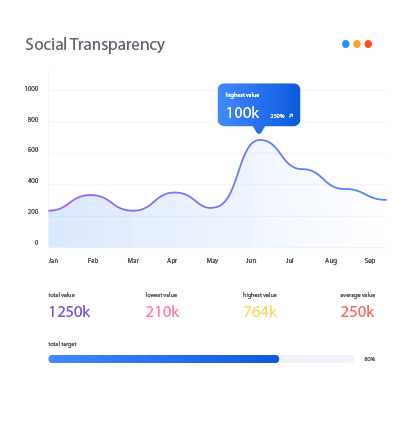
While traffic was down, her lead quality was through the roof. Her contact form submissions doubled, and the people filling them out were her exact target audience. When measuring your long-tail strategy, you must look beyond vanity metrics.
Key metrics to track:
- Conversion Rate by Landing Page: Are your long-tail pages actually turning visitors into leads?
- Average Order Value (AOV) / Lead Value: Long-tail leads often have a higher lifetime value because they are a perfect fit for your service.
- Assisted Conversions: Sometimes a long-tail blog post is the first touchpoint in a longer user journey.
- Keyword Rankings for Niche Terms: Monitor your progress in SERP features like “People Also Ask.”
9Frequently Asked Questions

The journey to mastering SEO can feel like trying to solve a puzzle while the pieces are constantly changing shape. But remember: Google’s ultimate goal is to provide the best possible answer to a user’s question. When you use long-tail keywords, you aren’t just “doing SEO”—you are becoming the best possible answer for someone who truly needs your help.
Stop chasing the crowds. Start speaking directly to the individuals who are looking for exactly what you offer. It takes more research and more thoughtful content, but the payoff—a business built on high-quality, sustainable leads—is worth every second of the effort.